
India-US Trade Deal 2026: Key Facts, Impact & Strategic Importance Explained
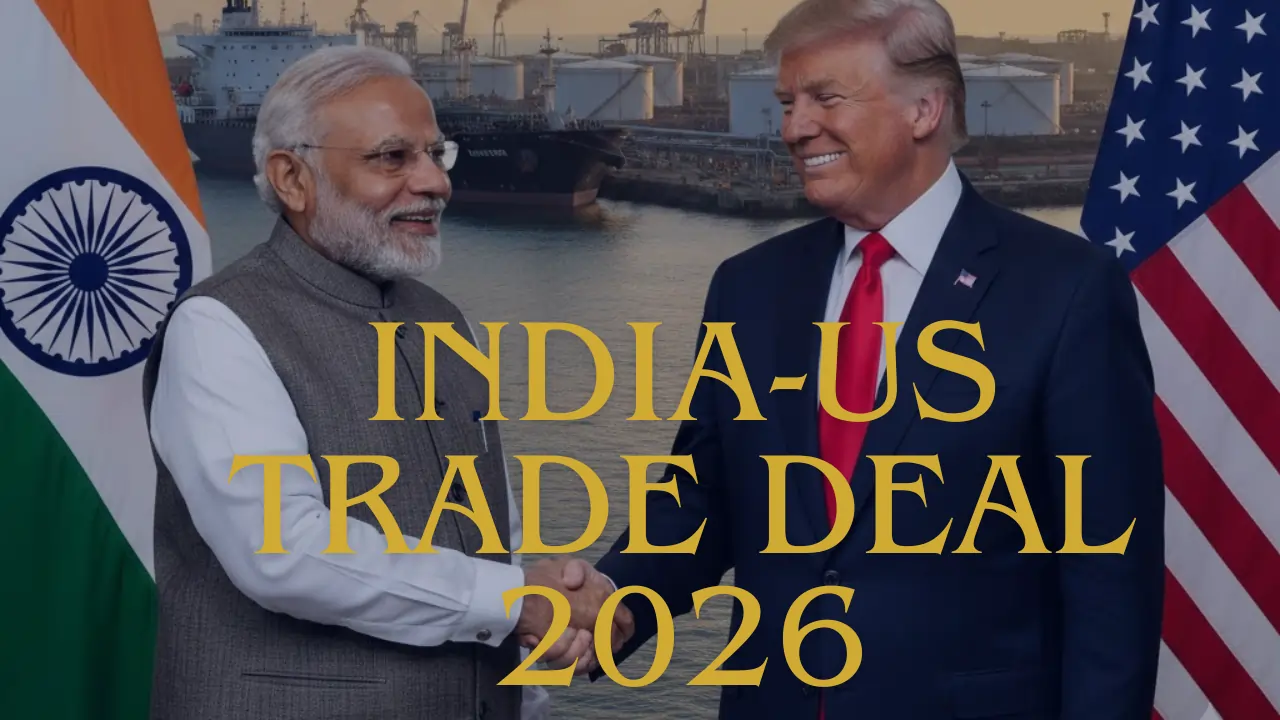
In February 2026, India and the United States reached an agreement on the framework of a historic interim trade deal. This has led to a significant reduction in ongoing trade tensions between the two countries, with mutual tariff rates dropping from 50% to 18%.
Key Points
For competitive exam preparation, here are the most important aspects of the India-US trade deal in a table:
| Aspect | Key Information | Importance for Exams |
|---|---|---|
| Deal Status | Interim deal framework finalized in Feb 2026. A step towards a final Bilateral Trade Agreement (BTA). | Important Current Affairs topic. |
| Tariff Change | US reduced reciprocal tariffs on Indian goods from 25% to 18%. Total effective tariff (after removal of punitive duty) fell from 50% to 18%. | Questions related to Economy and International Relations. |
| India’s Commitments | 1. Halting/reducing purchase of Russian oil. 2. Reducing tariffs on American agricultural & industrial goods. 3. Removing non-tariff barriers (e.g., in medical devices, ICT products). |
Trade Policy and Foreign Policy decisions. |
| USA’s Commitments | 1. Removing national security tariffs on Indian aircraft and parts. 2. Tariff concessions on Indian products like textiles, leather, plastics. |
Pattern of concessions in Bilateral Relations. |
| Economic Impact (Estimate) | As per Goldman Sachs, this could add 0.2% to India’s real GDP growth and reduce private investment uncertainty. | Economic Growth related data and estimates. |
The Story of India-US Trade Relations: From Conflict to Deal
This trade deal did not happen overnight. It is the result of prolonged trade tensions and strategic negotiations. Let’s understand it from the beginning.
Background: Why was there tension?
- History of High Tariffs: The US had long criticized India’s high import duties (averaging 37% on agri-products, over 100% on some automobiles).
- “Tariff King” Image: In mid-2025, the US imposed a 25% reciprocal tariff on Indian goods, making India the country facing the highest US tariffs in the Asia-Pacific region.
- Russian Oil Dispute: Due to India’s continued purchase of cheap oil from Russia during the Ukraine conflict, the US imposed an additional 25% punitive duty in August 2025. This increased the total tariff burden on Indian exports to 50%.
The Path to Reconciliation: How was the deal made?
A historic turn came in February 2026 after a telephone conversation between PM Narendra Modi and President Donald Trump.
- India’s Strategic Commitment: India agreed to curb purchases of Russian oil and shift its energy needs to other sources (like the US).
- Relief from the US: In response, President Trump signed an executive order removing the additional 25% punitive duty and reduced the reciprocal tariff from 25% to 18%.
- Agreement on Interim Framework: Both countries agreed on a framework for an interim trade deal of mutual benefit, which will pave the way for a comprehensive Bilateral Trade Agreement (BTA).
Current Status of the Deal (As of February 2026)
- Next Steps: According to the White House, both nations will work in the coming weeks to finalize this interim deal.
- Remaining Issues: Negotiations will continue on complex issues like services, investment, intellectual property, labor, environment, and government procurement.
- Long-term Goal: The ultimate aim of this process is to create a complete Bilateral Trade Agreement (BTA) that provides long-term stability to trade relations between the two countries.
❓ Potential Questions for Competitive Exams (FAQs)
1. What is the strategic significance of this deal in India-US relations
This deal is not just commercial but signifies a strategic partnership. It affirms India’s role as a major strategic partner for the US and helps in creating a balance against Chinese influence in the Indo-Pacific region.
2. What benefits will the Indian economy get from the deal?
- Boost to Exports: Exports will become cheaper and more competitive in sectors like textiles, leather, plastics, generic medicines, gems & jewellery, aircraft parts.
- Increase in Investment: Reduced trade uncertainty will boost foreign investor confidence. Goldman Sachs believes this could energize the private investment cycle.
- Technical Cooperation: Cooperation is expected to increase in digital trade, supply chain resilience, and joint technical projects (like semiconductors).
3. Can there be any challenges or disadvantages for India?
- Pressure on Agriculture: Reduced duties on American agricultural products (like almonds, soybean oil, apples, wine) may lead to increased competition for Indian farmers.
- Policy Shift: Reducing dependence on Russian oil will lead to changes in energy security strategy.
4. What were the key figures for India-US trade in FY 2024-25?
- Total Bilateral Trade: A record of approximately $132 billion.
- India’s Trade Surplus: Approximately $40.82 billion.
- Major Imports from US: Mineral fuels & oils, precious metals & stones, machinery.
- Major Exports to US: Electrical machinery, precious metals & stones, pharmaceutical products.
5. What is ‘Mission 500’?
This is an initiative launched under the India-US Compact 2025, aiming to increase bilateral trade to $500 billion by 2030. This new deal is seen as a crucial step towards achieving that goal.
What is your opinion on this deal? Do you think it is in India’s long-term interests? Do share your thoughts in the comments below!